Atlas Peptides Adopts a 99%+ Purity Standard Across Its Full Research-Peptide Line
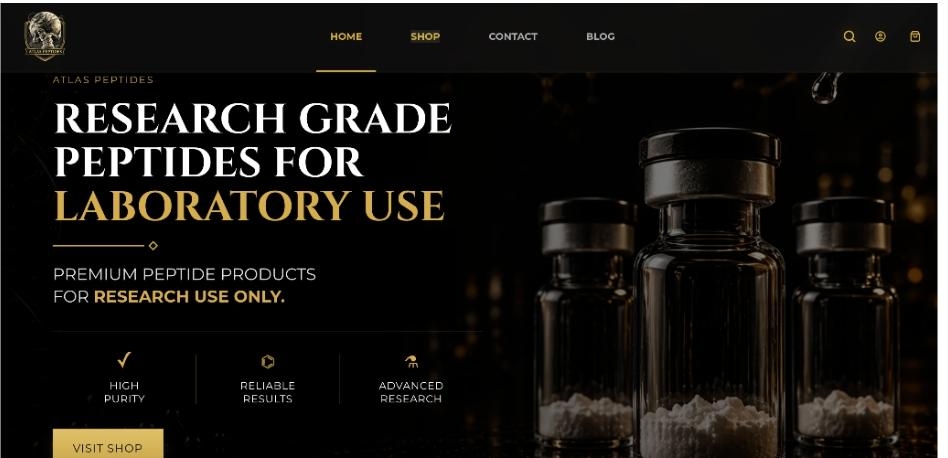
LONDON, UK – 24 September, 2026 – Every product in the catalogue is now independently HPLC- and mass-spec-tested to 99%+ purity, with a batch-specific Certificate of Analysis published for every lot, for laboratory research use only.
Atlas Peptides, a research peptides supplier in the UK, has set a line-wide purity standard of 99% or higher, verified through independent HPLC and mass-spectrometry testing on every batch. The standard now covers all 31 research compounds in the company’s catalogue, from single peptides to blended formulations such as GLOW and KLOW. Each batch carries its own Certificate of Analysis (COA), published in the company’s COA library for researchers to check before they order. All products are supplied strictly for laboratory research use.
What the 99%+ Peptide Purity Standard Means
A purity standard is only useful if a buyer can check it. Atlas Peptides now applies one testing threshold, one independent lab and one published record to every product it sells, replacing the mix of unverified claims that has typified the wider category.
Dual-Method Testing: HPLC and Mass Spectrometry
High-performance liquid chromatography (HPLC) measures what percentage of a sample is the labelled compound, separating it from breakdown products and other impurities. Mass spectrometry confirms the sample’s identity by matching its measured molecular mass against the expected value. Atlas Peptides runs both tests on every batch before it reaches a researcher, with the results published rather than taken on trust.
99%+ Purity Across Every Product and Blend
The standard applies to the company’s full range of 31 products, covering single peptides and blended formulations alike. No product in the catalogue falls outside the 99% threshold.
A Batch-Specific COA in the COA Library
Every batch carries a lot number matched to the vial, a purity percentage and a test date. Atlas Peptides publishes each certificate in its online COA library, so a researcher can check the record before or after they buy.
Why Research Peptide Purity is Crucial for Reliable Results
Purity claims are common across the UK research-peptide market. Verifiable ones are not.
The Purity Gap in the UK Research-Peptide Market
UK research peptides currently span roughly £15 to £125 depending on compound and supplier, and testing claims vary just as widely. A stated purity figure with no certificate behind it gives a buyer no way to confirm what is actually in the vial.
Rising Scrutiny of Peptide Suppliers in 2026
Researchers have increasingly faced inconsistency and data contamination caused by unverified peptide suppliers and substandard reagents across the market. Many low-grade sources supply products with unconfirmed purity levels, introducing critical vulnerabilities into experimental data and delaying research timelines. Atlas Peptides positions its rigorous, published quality standards as a direct solution, giving laboratories verified, repeatable baseline purity they can depend on for consistent research results.
How Atlas Peptides Verifies Every Batch
Testing means little without an independent party running it and a lab willing to put its name on the result.
Independent, Third-Party Lab Verification
Atlas Peptides’ testing is carried out by Janoshik Analytical, an independent laboratory with a solid reputation. Janoshik does not sell peptides or partner with vendors as a preferred lab, which keeps its results structurally separate from the companies it tests for.
HPLC Purity Testing Explained
HPLC separates a sample into its component parts and measures the proportion matching the target compound. A 99%+ result means less than 1% of the sample is anything other than the labelled peptide. This also applies to compound combinations like GLOW, KLOW stack peptide.
Mass-Spec Identity Confirmation
Janoshik also runs mass-spectrometry identity checks on every batch, matching a sample’s measured molecular mass against the known reference value for that peptide. This runs alongside HPLC purity testing as a second, independent check confirming that a vial contains what its label says.
“Researchers can only trust a result when they can actually verify what’s in the vial,” said Daniel Cross, QC Analyst at Atlas Peptides. “A purity figure doesn’t serve any purpose without a certificate to back it, so we publish the batch data and let researchers verify it themselves.”
How Buyers Can Verify an Atlas Peptides COA
Checking a certificate takes a minute and needs nothing beyond the batch number printed on the vial.
Matching a Batch Number to Its Certificate of Analysis
A researcher finds the batch number on the product label, searches for it in the COA library, and matches it against the certificate for that specific lot before relying on the result.
What to Check on a Peptide COA
A complete COA states the purity percentage, the batch or lot number, the test date and the testing lab’s name. Atlas Peptides publishes all four on every certificate.
Atlas Peptides’ Commitment to Research-Use Compliance
Every product Atlas Peptides sells is labelled and marketed clearly for laboratory research use only. The company does not describe its compounds by any human health outcome, and it sells only to qualified researchers rather than consumers. That RUO labelling applies across the full catalogue, without exception for any single product or blend.
Atlas Peptides’ Roadmap for Peptide Testing and Transparency
The current standard is a floor, not a finished project, according to the company.
“Publishing today’s batch data is the starting point, not the finish line,” said Katie Wilson, Production Specialist at Atlas Peptides. “We’re working toward wider public access to certificates and expanded testing coverage as the catalogue grows, so the standard keeps pace with the range.”
Toward Public, Searchable COAs
Atlas Peptides has said it plans to expand the COA library into a fully searchable public record, letting researchers look up a certificate by batch number without needing to place an order first.
About Atlas Peptides
Atlas Peptides is a UK-based supplier of research peptides, founded in March 2026 by a team frustrated with the patchy service, unclear pricing and thin testing information they found elsewhere in the market. The company holds and ships stock from within the UK, across single peptides and blended formulations, under the stated position “evidence over hype, education over bro-science, service over the sale.” Atlas Peptides products are supplied strictly for laboratory and research use only and are not intended for human or veterinary use.
Media Contact
Company Name: Atlas Peptides
Contact Person: Media Relations
Email: Send Email
Phone: +44 7520 692482
City: London
Country: United Kingdom
Website: https://atlaspeptides.co.uk/


